
Ceylon Eco Spices Website
E-commerce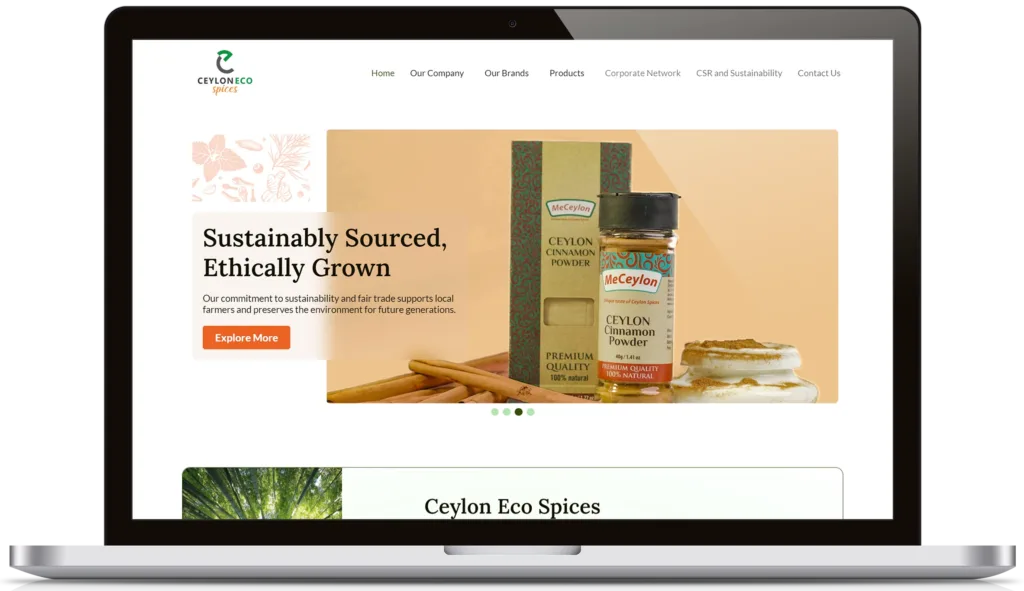
Project
A brief overview of the client’s requirements, project scope, and verified feedback or delivery outcome.
Our client, Ceylon Eco Spices, required a website to showcase and facilitate the ordering of their premium spices. Their primary objective was to provide an intuitive and user-friendly platform for their customers to browse a wide range of spices and place orders efficiently.
Our responsibilities for this project included every aspect of website design and development. We began with an initial consultation to understand their business needs and goals.
Ceylon Eco Spices company required a website with:
- A product catalog showcasing their spices with detailed descriptions.
- A seamless and secure bulk-ordering system.
- A responsive and visually appealing design to enhance user experience across all devices.
- An easy-to-navigate interface to simplify the browsing and ordering process.
Project outcome
Delivered a responsive spice catalogue and efficient bulk-ordering experience that lets customers browse detailed products and place enquiries consistently across devices.
Solution
A summary of the tailored solution delivered to meet the client’s needs and address their feedback effectively.
Delivery perspective
“The website features a simple, responsive design that showcases your spices, with a robust catalog and efficient ordering system, ensuring fast, seamless performance across all devices.”
To deliver a solution that met our client’s requirements, we began by carefully planning the website structure to prioritize simplicity and usability. Our design team crafted a sleek, responsive layout that highlighted the quality and variety of the spices while ensuring an effortless browsing experience for users.
Once the design was finalized, our developers brought it to life, integrating key features such as a robust product catalog and an efficient ordering system. Special attention was given to ensuring the website performed seamlessly on all devices, providing customers with a consistent and user-friendly experience. Finally, we optimized the website’s performance to ensure quick loading times and an engaging, hassle-free experience for users.

Frequently Asked Questions
Project-specific answers about Ceylon Eco Spices Website, including the original requirements, delivered capabilities, and practical planning lessons.
What did Ceylon Eco Spices need from this spice catalogue and bulk-ordering website?
Ceylon Eco Spices needed to present its premium spice range clearly and let customers place bulk orders through an intuitive digital journey. The scope was therefore shaped around the client’s real content, users, operational responsibilities, and conversion path instead of applying a generic website template.
Which capabilities were delivered for Ceylon Eco Spices?
The documented solution includes a detailed product catalogue, product descriptions, a bulk-ordering flow, simple navigation, and a responsive interface across devices. These capabilities were selected to support the project requirements described in this case study; a new project would be scoped against its own users, systems, content, and constraints.
How did Codezela approach the Ceylon Eco Spices website build?
For this project, the site structure prioritised catalogue clarity and ordering usability, with a visual design that highlighted the products before the responsive catalogue and ordering features were developed and performance-optimised. This is a project-specific record of the delivered approach; the scope, timeline, and outcomes for a new build would depend on its own requirements and starting point.
What can teams planning a similar spice catalogue and bulk-ordering website learn from the Ceylon Eco Spices project?
The practical takeaway is that B2B food-product websites work best when product information, pack or order requirements, enquiry or ordering steps, mobile usability, and internal fulfilment responsibilities are defined together. Discovery should confirm those decisions before design and development so the final experience works for visitors and the people responsible for operating it.